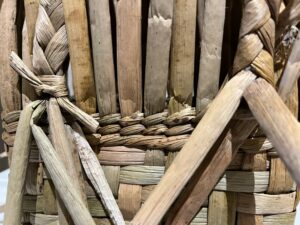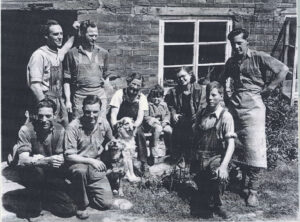
Weaving is one of the world’s oldest crafting traditions and can be traced back in the creative histories of most countries. Weaving natural materials today demonstrates a re-awakening of tradition and identity, as well as a renewed desire for a connection to the land and historic creative practices. The unique and personal nature of a hand-woven product is international and, in the present day, highlights a diverse intercultural exchange. A clear thread interwoven through these women’s practices is the focus on a sustainable practice which utilises time-honoured methods. They demonstrate the versatility of natural materials to produce works which span the full range of decorative to practical whilst simultaneously keeping alive traditional craft making. Below are the profiles of five women who are practicing this craft today…
Rebecca Small, for example, is a weaver from New Zealand who lives in the UK and makes traditional Māori kete whakairo (patterned baskets) out of plants grown locally in Warwickshire. The kete kupenga was traditionally used for gathering seafood, and the large holes would have acted like a sieve to drain water and sand away. However, its sculptural form lends itself to being displayed in the modern home. Made from Harakeke (otherwise known as New Zealand flax) grown in Warwickshire and adorned with a paua shell (native to New Zealand), Small’s work physically weaves together these complimentary international materials.

Rachel Harwood is a contemporary British willow artist whose work explores the connection between nature, heritage craft, and place. Based in Warwickshire, she creates sculptural pieces for the home and garden using sustainably sourced British willow, often grown in Somerset. Her practice is deeply inspired by the natural world, drawing on observations of wildlife and landscape to capture a sense of movement and quiet stillness within her forms. Harwood’s work reimagines traditional basketry techniques within a contemporary sculptural context, allowing the organic qualities of willow to guide each piece. Through processes of rhythm, tension, and responsiveness to the material, she transforms a functional craft into expressive art. Alongside her studio practice, she teaches workshops and online courses, sharing her skills with others. Her teaching reflects a commitment to preserving traditional crafts while encouraging creative engagement with natural materials.

Willow is also grown and used by Clare Shilvock (aka Warwickshire Willow). Using over 60 varieties which are cultivated and harvested sustainably, her practice is rooted in a strong connection to nature and a desire to “live lightly on the land”. Clare produces a wide range of handcrafted work, including traditional and modern baskets, sculptures, garden structures, and homeware. Her pieces highlight the natural colour, texture, and flexibility of willow, blending heritage craft techniques with contemporary design. Alongside her making, she is committed to preserving basketry as a traditional skill. She teaches workshops and courses, sharing her knowledge to inspire others and keep this historic craft alive for future generations.
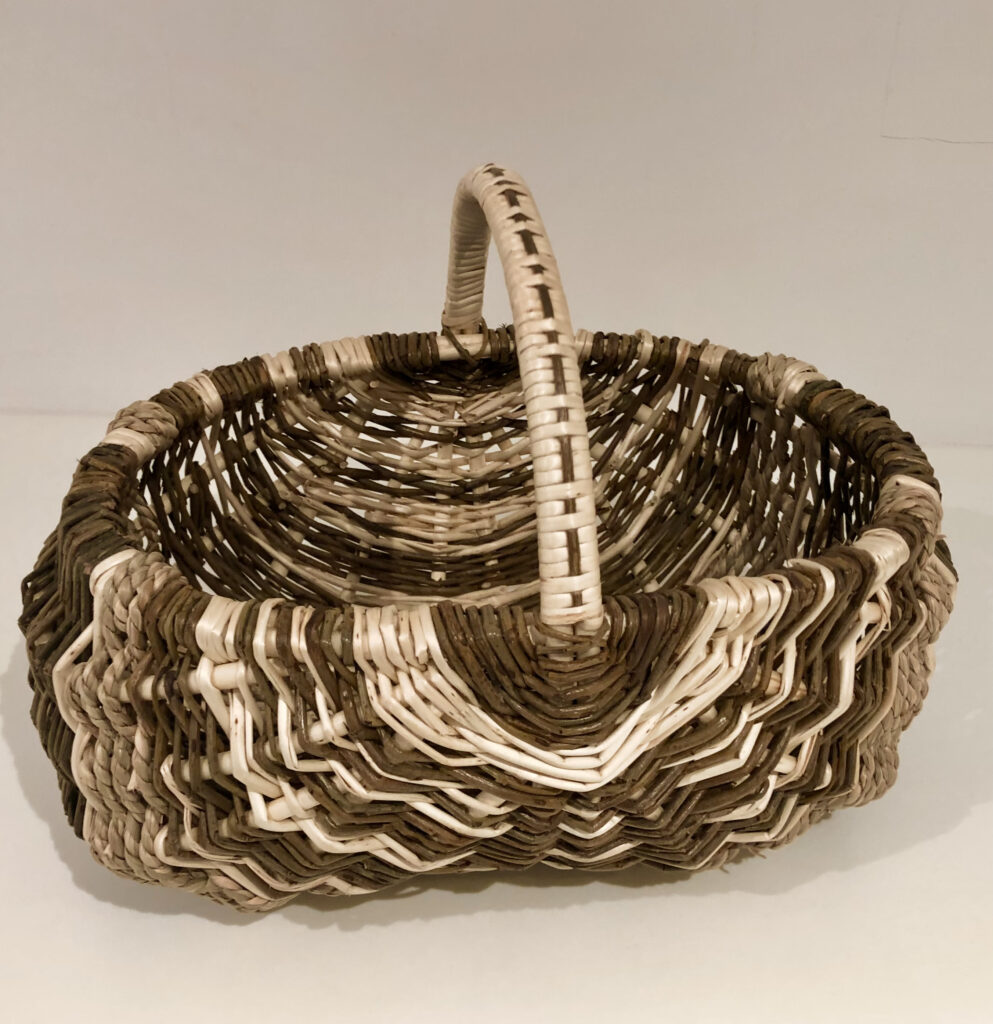
The basket maker, Rosie Farey’s work demonstrates this through the vivid greens and yellows, highlighted even further through the way in which the rush has been woven together. Farey harvests her own bull rush crop annually from Somerset, a process which she describes as a pilgrimage. Her practice ranges from miniature baskets to more practical everyday pieces like placemats, and she is now branching into exploring more specific traditional baskets, such as the Irish turf basket.
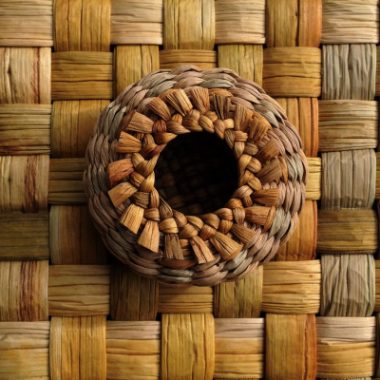
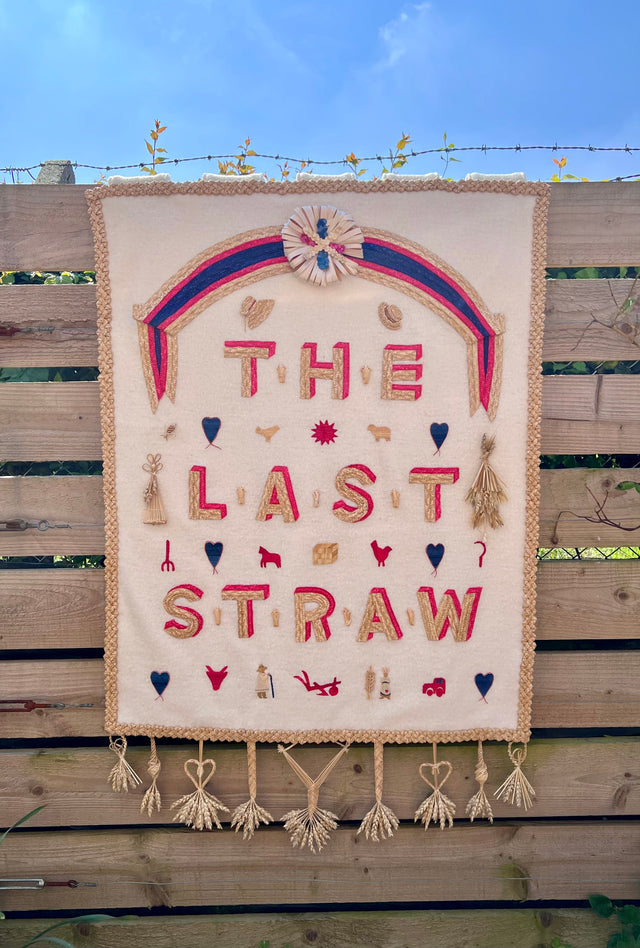
Penny Maltby’s work as a straw maker reflects a deep respect for heritage skills, transforming humble materials into finely detailed decorative and functional pieces that echo rural traditions. She specialises in techniques such as straw plaiting and straw marquetry, carefully selecting and preparing each stem to achieve subtle variations in tone, texture, and sheen. Her pieces often include intricate geometric patterns, delicate surface designs, and finely constructed forms that reflect both patience and precision.
Beyond their own making, all five of these women are playing their part in passing on these endangered skills through teaching, demonstrations, and workshops, helping to ensure that weaving remains a living tradition rather than a forgotten one.
‘Nature Woven into Contemporary Practice’ is running between Saturday 28 March and Sunday 26 April. It will showcase the work of Rosie Farey, Rebecca Small, Rachel Harwood, Penny Maltby, and Clare Shilvock who have honed this ancient craft with straw, willow, flax, and rush in the contemporary arts space.
Come along and meet them at our demonstration day on Saturday 4 April, 10am-1pm! Court Barn is open Tuesday to Sunday between 10am and 4pm, admission to this exhibition is free.